
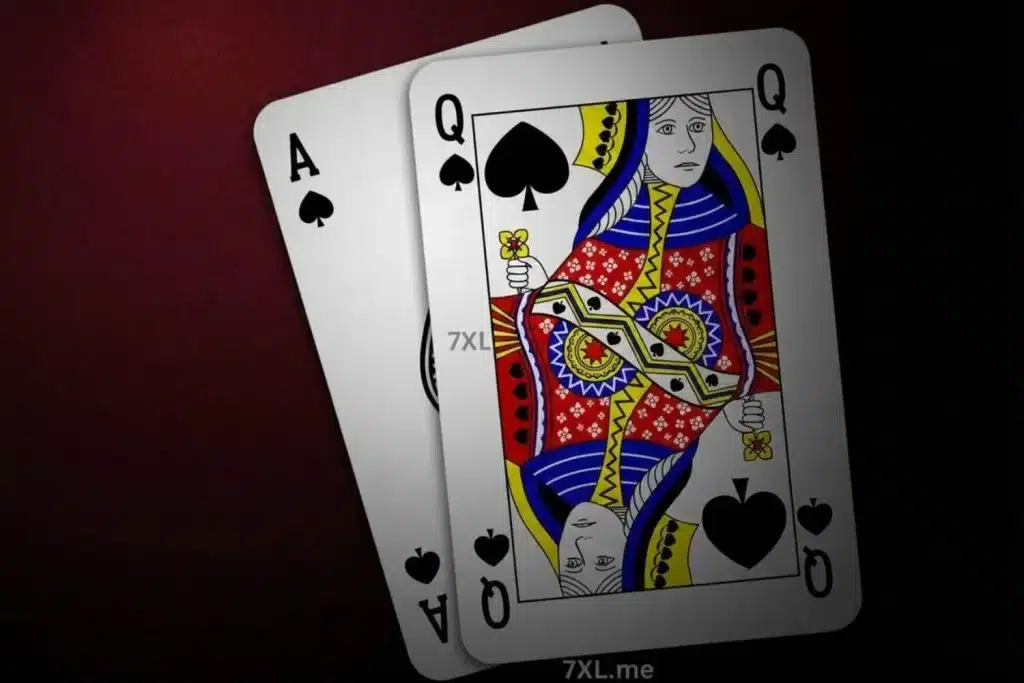
Ace queen suited is one of those hands that makes players feel powerful but also gets them into big, expensive trouble. Used well, it is a money maker. Misplayed, it quietly bleeds your bankroll. In this guide, I will walk you through how strong ace queen suited really is, where people go wrong with it, and how to adjust your poker strategy with it across online games, live cash, and tournaments.
Is ace queen suited really a premium starting hand or is it overvalued?
Many newer players treat ace queen suited like aces or kings. It is strong, but it is not that strong. In modern poker math, ace queen suited usually sits just outside the “true premium” group. That group is aces, kings, queens, jacks, and ace king suited.
When you look at solver outputs and preflop charts published by leading training sites, ace queen suited consistently ranks inside the top 3 to 5 percent of all starting hands. It performs very well against most of the deck, especially when you have position, deep stacks, and weaker opponents behind you. However, it is also heavily dominated by ace king and by bigger pairs. That means when huge money goes in preflop, your equity often drops sharply.
The bottom line: ace queen suited aqs is a premium drawing hand, not a premium all in hand. It loves seeing flops, applying pressure, and using its equity. It does not love being all in for 150 big blinds against a tight player who 4 bets only with monsters.
How should I play ace queen suited preflop in different positions?
Preflop is where most of the big mistakes with ace queen suited happen. Let us break it down simply by position, assuming typical 6 max online cash games or standard 9 handed live games.
Early position (UTG / UTG+1): In most standard online games, you should open raise ace queen suited from any position. From early position, raise to your usual size and be prepared to face calls and occasional 3 bets. Against unknown players, folding ace queen suited to a massive 4 bet from a very tight opponent is perfectly fine, especially when deep stacked.
Middle position: Here ace queen suited gets more powerful. You still open it every time, and you can start 3 betting more aggressively versus late position raises, especially if the opener is loose. Solvers typically recommend 3 betting ace queen suited at some frequency against button and cutoff opens because it plays very well in position against calling ranges.
Button and cutoff: On the button, ace queen suited is a slam dunk raise and a very strong 3 bet candidate. You have position, initiative, and a hand that can dominate your opponent’s calling range. In good online environments and trusted apps like ace-queen suited aqs, poker strategy, starting hands, how to play ace-queen, you will often see strong players using ace queen suited as one of their main aggression hands in late position.
Small blind: This is where things get tricky. Out of position, ace queen suited loses some of its value. You still want to 3 bet it frequently against late position opens, but against early position raisers with very tight ranges, calling or occasionally folding to huge 4 bets is reasonable. Avoid flat calling too much from the small blind, especially in tougher online games, because multiway pots out of position are hard to navigate.
Big blind: Versus a single raise, ace queen suited is almost always strong enough to 3 bet or call depending on the opener. Against late position raises, 3 betting is usually best. Against very tight early opens, calling is safer and keeps your opponent’s range wide.
Should I ever go all in preflop with ace queen suited?
This is one of the most common and important questions. The answer depends on stack size, format, and your opponent type.
Deep cash games (100 big blinds or more): You should rarely be willing to get 150 big blinds in preflop with ace queen suited against a tight 4 bet range. You are usually up against ace king, queens, kings, or aces, and your equity is not great. Call 3 bets in position, 4 bet as a bluff or value mix in some lineups, but be disciplined against very strong resistance.
Shorter stacks (20 to 40 big blinds), especially tournaments: Now ace queen suited becomes a top tier shove and call off hand. In many late stage tournament spots, especially blind versus blind, ace queen suited is clearly strong enough to go all in preflop. It dominates many of the hands your opponent will reshove with like ace jack, ace ten suited, and king queen suited.
Versus recreational players: If you know your opponent is capable of jamming worse aces, broadways, and medium pairs, then shipping ace queen suited or calling off becomes much more profitable. The key is being honest about how wide their range really is, not what you hope it is.
As a general rule: the shorter the effective stack, the more comfortable you should be committing all in preflop with ace queen suited.
What is the best flop strategy with ace queen suited when I hit top pair?
This is where experience really separates winning players from break even players. Top pair top kicker with ace queen suited is very strong, but it is still a one pair hand.
Dry boards (like Q 7 2 rainbow): You usually want to continuation bet for value when you are the preflop raiser. Your hand is way ahead of most of your opponent’s calling range that includes weaker queens, pocket pairs, and gutshots. Use a smaller sizing to keep worse hands in.
Draw heavy boards (like Q J 9 with a flush draw): Now the situation is more complex. You still have strong top pair, but you can be in trouble versus sets, two pairs, and made straights. Against one opponent, betting for value and protection is usually best, but be ready to slow down if you face a raise from a tight player. Against multiple opponents, consider using a slightly larger sizing or sometimes pot controlling in position.
Multiway pots: Top pair loses a lot of relative value when three or more players see the flop. You should still often bet, but you need to be much more cautious on later streets. Calling down huge turn and river bets in multiway pots with only top pair, even with ace queen suited, is often a mistake.
How should I play ace queen suited when I completely miss the flop?
One of the biggest strengths of ace queen suited is how well it plays as a semi bluff and as a high card hand on certain boards.
As the preflop aggressor: You can continuation bet many flops even when you miss, especially on boards that favor your perceived range, like high card boards or low disconnected boards. Having ace high with backdoor flush draws and overcards gives you solid equity. That said, you do not need to auto c bet every board. On very wet, low, multiway boards, it is fine to check and give up versus heavy resistance.
As the caller preflop: When you call a 3 bet with ace queen suited and miss, you need to be more disciplined. Fold against heavy aggression on very bad boards for your range. Continue on boards where you have backdoor draws, position, and where your opponent is likely to over c bet. Use your position to float and apply pressure on later streets if they give up.
How important is the suited part of ace queen suited really?
The suitedness is not just a small bonus. It is a major part of why ace queen suited is so profitable. The flush potential adds significant equity in both single raised and 3 bet pots.
When analysts look at hand rankings and equity simulations, ace queen suited outperforms ace queen offsuit by a meaningful margin across most typical ranges. The suited quality lets you semi bluff more confidently, barrel more turns, and call more often with backdoor equity. It also means that when you make a flush, it is more likely to be the nut or near nut flush, which leads to bigger pots won.
Are there differences in how I should play ace queen suited in online games versus live games?
Yes, and they matter. Online pools, including those on modern apps and sites, are generally tighter and more aggressive in certain stakes. Live games tend to have more passive, loose recreational players.
| Environment | Typical Tendencies | AQs Adjustments |
|---|---|---|
| Online mid stakes | More 3 betting, tougher regulars | Be disciplined vs 4 bets, mix call and 3 bet, value position |
| Live low stakes | Loose calls, fewer bluffs | Open raise for value, avoid huge bluffs, bet thinner for value |
| App / club games | Varied player quality, wide ranges | Exploit loose players, but verify platform security and fairness |
In live low stakes games, you will often make more money by simply value betting ace queen suited hard against weaker top pairs and drawing hands rather than by trying advanced bluffs. Online, especially in regulated markets like those overseen by the UK Gambling Commission or MGA, you will face more technically sound players and need a clearer mix of theory based and exploitative strategy.
What do experts and regulators say about playing strong drawing hands like ace queen suited responsibly?
Strong but tricky hands like ace queen suited can easily draw players into oversized pots and emotional decisions, especially when playing online for real money. Responsible gambling groups and regulators emphasize keeping clear limits and not overvaluing any single hand as a way to “win back” losses.
According to BeGambleAware, one key sign of risky play is “chasing losses by increasing bet size or playing more aggressively after a setback.” Strong starting hands like ace queen suited are not a guarantee of winning a pot, and players should treat them within a structured bankroll and game plan, not as a shortcut to recover losses.
International regulators like the UK Gambling Commission and Malta Gaming Authority also require operators to offer tools such as deposit limits, session reminders, and self exclusion so that players can manage their risk. When you are choosing where to play hands like ace queen suited online, always look for platforms with licenses from recognized regulators and visible responsible gambling tools. That way, you can focus on learning better strategy while knowing the games are audited for fairness.
What are the most common mistakes players make with ace queen suited?
From years of live and online play, I see the same leaks over and over.
Overplaying it preflop against tight ranges: Getting 150 or 200 big blinds in against a rock who only 4 bets aces, kings, and ace king.
Falling in love with top pair: Calling down three streets on scary runouts just because you flopped top pair top kicker.
Underusing its bluffing potential: Some players only play ace queen suited for its made hands and forget that its backdoor equity and blockers make it a strong candidate for well timed bluffs.
Ignoring position: Treating ace queen suited the same from early position and the button is a costly mistake. Position dramatically increases its profit potential.
What is a simple, practical game plan for ace queen suited I can start using today?
You do not need solver level complexity to improve your win rate with ace queen suited. Here is a straightforward approach you can take into your next session.
Open raise ace queen suited from every position. In late position, 3 bet more often against loose opens, especially when you have position.
Be cautious about getting all in preflop with deep stacks against tight 4 bets. Call and see a flop rather than auto shove.
On flops where you hit top pair, bet for value but be ready to slow down on very dangerous boards or against heavy aggression from tight players.
When you miss, still use ace high plus backdoor draws to continuation bet on good textures, especially in position. Give up more often in multiway pots and on boards that strongly favor your opponent’s range.
Always consider stack depth and opponent type. Short stack tournaments allow for much more aggressive preflop play with ace queen suited than deep cash games.
By treating ace queen suited as a powerful but not invincible weapon in your starting hands arsenal, and by adjusting to position, stack size, and player type, you will turn a hand that many players misplay into one of your most consistent long term winners.
This article should not be considered gambling or financial advice. Always play responsibly.